May 5, 2026 · Leadbuild Team
Customer Feedback Analysis Template vs manual customer research: What Should performance marketers Use?
.
12 min read · customer feedback analysis template, brand brief template, campaign brief template, marketing brief template, creative brief template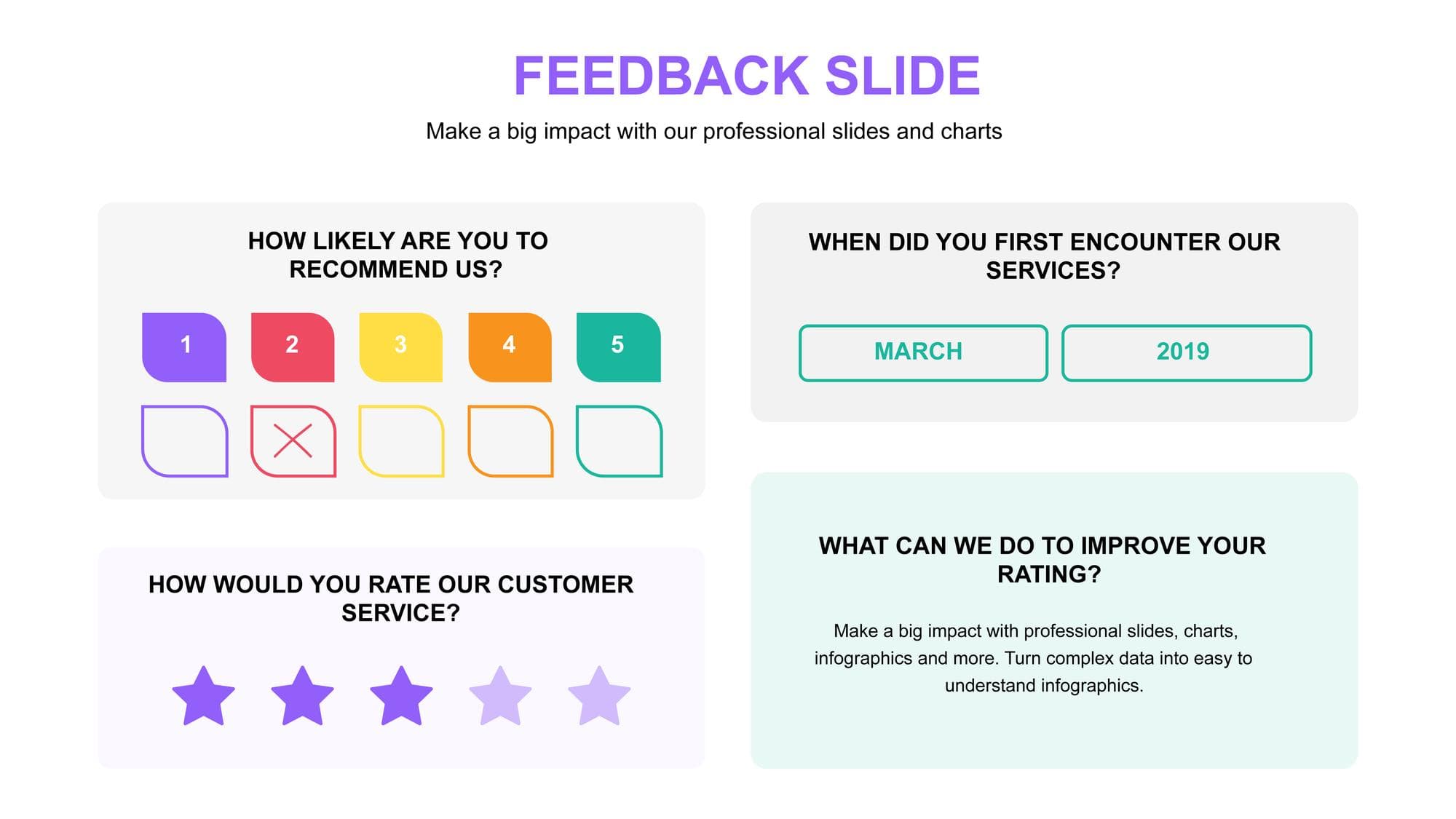
customer feedback analysis template matters because customer research only becomes useful when teams can turn raw interviews, sales calls, feedback, objections, and direct language into campaign-ready evidence. Without structure, the best customer insight stays buried in transcripts, notes, spreadsheets, or chat threads.
The practical goal is to preserve source context while making research usable for briefs, ads, landing pages, sales enablement, and content. A strong template separates exact quotes from themes, maps evidence to campaign decisions, and shows whether each insight is draft, reviewed, approved, restricted, or rejected.
Direct answer: customer feedback analysis template should help performance marketers organize customer language into source-backed themes, claims, objections, proof points, and campaign recommendations that can be reviewed and reused.
Why Research Templates Break Down
Research templates break down when they collect notes but do not shape decisions. A team may have interviews, sales calls, support tickets, surveys, and reviews, yet still struggle to answer which message should lead, which objection matters most, or which proof point is approved for campaign use.
Common breakdowns include:
- quotes are saved without source, segment, or approval status
- AI summaries flatten customer language into generic themes
- customer objections never reach the campaign brief
- sales and marketing teams interpret the same call differently
- proof points are added after copy has already been drafted
The Leadbuild View
Leadbuild treats customer research as a source-backed campaign workflow. Research should move from raw source to exact language, theme, evidence strength, campaign use, review status, and approved brief fields.
For performance marketers, Leadbuild can help:
- preserve direct customer language with source links
- group interviews, calls, and feedback into useful campaign themes
- connect objections to proof, offer, copy, and landing page decisions
- keep AI-generated summaries grounded in source evidence
- store approved customer evidence for future brand and campaign briefs
Research Field Map
| Field | What It Captures | Campaign Use |
|---|---|---|
| Source | Interview, sales call, survey, review, ticket | Evidence trail |
| Segment | Role, account type, buying stage, use case | Audience targeting |
| Quote | Exact customer language | Hooks and copy |
| Theme | Repeated pain, trigger, desire, objection | Message direction |
| Evidence strength | Frequency, recency, source quality | Prioritization |
| Approved use | Draft, reviewed, approved, restricted | Activation control |
Core Workflow
- Gather interviews, sales calls, feedback forms, reviews, surveys, support tickets, CRM notes, and campaign comments.
- Attach each source to a segment, date, owner, and campaign relevance.
- Extract exact quotes, repeated pains, buying triggers, desired outcomes, objections, and proof requests.
- Group findings into themes that can inform a brand brief template, campaign brief template, marketing brief template, or creative brief template.
- Mark quotes, themes, and claims as draft, reviewed, approved, restricted, or rejected.
- Convert approved evidence into campaign fields: audience, hook, offer, proof, objection handler, CTA, and channel note.
- Feed campaign performance back into the template so future research synthesis improves.
Workflow Table
| Stage | Input | Output |
|---|---|---|
| Source intake | Calls, surveys, reviews, notes | Research library |
| Extraction | Raw language | Quotes and objections |
| Synthesis | Repeated patterns | Campaign themes |
| Review | Source links and claims | Approval status |
| Activation | Approved insights | Briefs and campaign assets |
| Learning loop | Results and feedback | Updated evidence |
Customer Feedback Analysis Template vs Manual Customer Research
Manual customer research is useful for judgment, nuance, and deep interpretation. A customer feedback analysis template is useful for repeatability, source tracking, evidence reuse, and campaign handoff.
| Decision Area | Manual Customer Research | Customer Feedback Analysis Template |
|---|---|---|
| Best for | Deep qualitative interpretation | Repeatable campaign evidence |
| Source tracking | Depends on researcher discipline | Built into fields |
| Quote reuse | Often manual | Reviewed and status-labeled |
| Campaign handoff | Summary-heavy | Brief-ready |
| AI use | Ad hoc summaries | Source-backed workflow |
| Review | Researcher judgment | Evidence and claim status |
The strongest setup uses both. Manual research finds meaning. The template makes that meaning reusable in campaign workflows.
Implementation Plan
Phase 1: Define Research Sources
List the sources that should feed the template: customer interviews, sales calls, surveys, reviews, support tickets, CRM notes, win/loss notes, and campaign comments. Assign each source an owner and source quality label.
Phase 2: Create Required Fields
Use required fields for source, segment, exact quote, theme, objection, evidence strength, campaign use, reviewer, and approval status. Keep optional fields for persona, buying stage, channel, and content idea.
Phase 3: Separate Language From Interpretation
Keep exact quote, summarized theme, and campaign recommendation separate. This lets reviewers see whether the meaning changed during synthesis.
Phase 4: Map to Briefs
Approved insights should flow into brief fields such as audience, hook, offer, proof, objection, CTA, landing page section, and channel note.
Phase 5: Update With Results
After launch, connect performance data back to the evidence. Winning hooks, strong objections, and high-converting proof points should become easier to reuse.
Metrics to Track
| Metric | What It Shows |
|---|---|
| Source-linked insight rate | Whether insights are traceable |
| Approved quote rate | Whether language can be reused |
| Theme reuse rate | Whether research informs campaigns |
| Rework from unsupported claims | Whether review happens early enough |
| Campaign learning captured | Whether the template improves over time |
Example Scenario
A growth team reviews interviews and sales calls before launching a new campaign. Without customer feedback analysis template, the team remembers general themes but cannot show which phrases, objections, or proof points should shape the ads.
With customer feedback analysis template, quotes are captured, themes are grouped, evidence is reviewed, and approved insights move into the campaign brief. The final campaign uses customer language without losing source context.
Copyable Template Structure
| Field | Guidance |
|---|---|
| Source name | Call, survey, review, CRM note, ticket, or interview |
| Source date | Keep recency visible |
| Segment | Role, company type, buying stage, or use case |
| Exact quote | Preserve the customer's words |
| Theme | Summarize the repeated meaning |
| Objection | Capture friction or hesitation |
| Desired outcome | Record the result the customer wants |
| Campaign use | Hook, claim, landing page section, CTA, or brief field |
| Review status | Draft, reviewed, approved, restricted, or rejected |
Quality Checklist
- Every insight has a source link.
- Exact quotes are separate from summaries.
- Themes are specific enough to guide copy.
- Objections are mapped to proof or content ideas.
- Campaign use is explicit.
- Review status is visible before activation.
When to Use Each Approach
Use manual research when the question is exploratory, the team needs deep context, or the research is early and ambiguous. Use a customer feedback analysis template when insights need to become repeatable campaign evidence.
| Scenario | Better Fit |
|---|---|
| Exploring a new market | Manual customer research |
| Turning quotes into ads | Customer feedback analysis template |
| Deep customer interviews | Manual customer research |
| Building campaign briefs | Customer feedback analysis template |
| Finding emotional nuance | Manual customer research |
| Reusing approved proof | Customer feedback analysis template |
Buyer Risks to Check
Performance marketers should avoid treating templates as a replacement for judgment. A template can organize evidence, but a reviewer still needs to decide whether a theme is accurate, a quote is usable, and a claim is supported.
The opposite risk is relying only on manual research. Manual synthesis can create useful strategy, but if source links, quote status, and campaign use are not structured, the insight becomes hard to reuse in ads, landing pages, and briefs.
Recommended Setup
Use manual research to understand meaning. Use the template to preserve evidence, mark approval status, and move the insight into campaign workflows. This gives performance marketers both nuance and repeatability.
Migration Plan
Start with one research-heavy campaign. Analyze the customer material manually, then structure the findings in the template: source, quote, theme, objection, proof request, campaign use, and review status. Compare the campaign handoff against the old process and keep the fields that reduced rework.
Practical Evaluation Checklist
Before choosing a workflow, performance marketers should test it with real inputs: one interview transcript, one feedback export, one sales call note, one support theme, and one campaign brief. The workflow should make it easy to preserve source context, identify repeated language, map objections to copy, and approve only the claims that have evidence.
| Evaluation Area | What Good Looks Like |
|---|---|
| Source handling | Every insight links back to source material |
| Quote quality | Exact language stays separate from summaries |
| Theme quality | Themes are specific enough to guide messaging |
| Campaign mapping | Insights become hooks, proof, FAQs, or offers |
| Review | Claims and quotes have visible approval status |
| Reuse | Approved evidence can feed future briefs |
Cost of Getting It Wrong
The cost is not just messy notes. Weak research workflows create vague ad angles, unsupported proof points, repeated stakeholder questions, and landing pages that miss the real objection. Manual research can create brilliant insight, but if it cannot move into the campaign workflow, the team keeps restarting from memory.
A customer feedback analysis template reduces that risk by turning customer evidence into a repeatable operating record. It does not remove judgment. It makes judgment easier to apply because reviewers can see the source, the theme, the interpretation, and the proposed campaign use together.
Operating Model
The best workflow assigns clear ownership. Research owners are responsible for source quality and accurate interpretation. Performance marketers are responsible for turning evidence into hooks, offers, objections, and landing page notes. Reviewers are responsible for deciding whether a claim, quote, or paraphrase can be used in campaign assets.
| Role | Responsibility |
|---|---|
| Research owner | Confirm source quality and meaning |
| Performance marketer | Map evidence to campaign decisions |
| Copy or content owner | Turn approved evidence into assets |
| Reviewer | Approve claims, quotes, and restrictions |
| Campaign owner | Decide what goes live |
This operating model prevents a common failure: one person does deep research, another person writes the campaign, and no one owns the translation between them.
Final Decision Rule
Choose manual customer research when the team still needs to understand the market. Choose a customer feedback analysis template when the team needs to operationalize what it already knows. If the campaign needs paid media hooks, landing page proof, objection handling, and repeatable review, the template should become the system of record.
The most mature teams do not choose one forever. They use manual research to discover nuance and structured templates to make that nuance usable across campaigns.
Rollout Plan
Start with one high-value campaign. Import five to ten customer sources, extract quotes and themes, map the strongest insights to campaign fields, and require review before launch. After the campaign, compare approval speed, rewrite volume, and message quality against the old manual process.
If the new workflow reduces confusion, expand it to the next campaign type. Keep the fields that people actually use and remove fields that become admin noise.
Risk Table
| Risk | Manual Research Failure Mode | Template Control |
|---|---|---|
| Lost source context | Notes are summarized without links | Source field required |
| Weak paid media hooks | Writer receives generic themes | Exact language and theme fields |
| Unsupported claims | Proof is checked after copywriting | Review status before activation |
| Slow approvals | Reviewer asks for source evidence late | Evidence visible in the template |
| Poor reuse | Research stays in one project folder | Approved insight library |
Implementation Example
A performance team wants to launch ads around a new offer. Manual research identifies that customers are frustrated by repeated campaign handoffs. The template turns that into exact quotes, a theme, an objection, a hook, a proof requirement, and a landing page note. The reviewer approves the paraphrased insight and restricts the exact quote. The campaign launches with customer-backed messaging and a clear evidence trail.
That is the practical difference. Manual research finds the insight. The template makes the insight safe and usable in production.
Final Buyer Guidance
For performance marketers, the decision should be based on campaign pressure. If the campaign will spend budget, use customer claims, rely on objections, or require stakeholder approval, a structured template is safer than loose manual notes. If the work is exploratory and not yet headed to production, manual research can stay lighter.
The best system lets both modes work together without forcing the team to restart. Research can begin manually, then move into the template once evidence needs to become campaign action.
That keeps discovery flexible while making launch decisions easier to review, approve, and repeat across future campaigns.
Try the interactive demoCommon Questions
What should a research template include?
It should include source, segment, exact quote, theme, objection, desired outcome, evidence strength, campaign use, reviewer, and approval status.
Can AI summarize customer research?
Yes, but AI summaries should preserve source links and stay separate from exact quotes and final campaign recommendations.
Should exact quotes be used in campaigns?
Only when usage is approved. Many teams use exact customer language internally and paraphrase it for public campaigns.
How does this reduce campaign rework?
It gives teams source-backed hooks, proof points, and objections before drafting starts, which reduces late-stage claim review and rewriting.
Is this only for paid media?
No. Research templates can support content, landing pages, email, sales enablement, client strategy, and brand briefs.
Governance Notes
customer feedback analysis template should make the source trail visible. Teams need to know which customer said what, how the language was interpreted, and whether the insight is approved for campaign use.
For performance marketers, the practical win is better customer-backed messaging with fewer unsupported claims.
Related reading
Detail when you need it
Questions from this guide
What should a research template include?
It should include source, segment, exact quote, theme, objection, desired outcome, evidence strength, campaign use, reviewer, and approval status.
Can AI summarize customer research?
Yes, but AI summaries should preserve source links and stay separate from exact quotes and final campaign recommendations.
Should exact quotes be used in campaigns?
Only when usage is approved. Many teams use exact customer language internally and paraphrase it for public campaigns.
How does this reduce campaign rework?
It gives teams source-backed hooks, proof points, and objections before drafting starts, which reduces late-stage claim review and rewriting.
Is this only for paid media?
No. Research templates can support content, landing pages, email, sales enablement, client strategy, and brand briefs.
Governance Notes
customer feedback analysis template should make the source trail visible. Teams need to know which customer said what, how the language was interpreted, and whether the insight is approved for campaign use. For performance marketers, the practical win is better customer-backed messaging with fewer unsupported claims.
Final Takeaway
Research templates are useful when they turn customer evidence into campaign decisions. Preserve exact language, group themes carefully, review claims before activation, and move approved insights into briefs, ads, landing pages, and content. Leadbuild helps teams convert customer research into source-backed campaign briefs, approved language, and reusable marketing workflows.
Start building from what your customers said.
Follow one source from raw conversation to a campaign claim your team can defend.